
Governor Newsom Announces Special Free Pass to California’s State Historic Parks in Honor of Juneteenth and America’s 250th Anniversary
Contact:
Newsroom@parks.ca.gov
Link to Media Kit
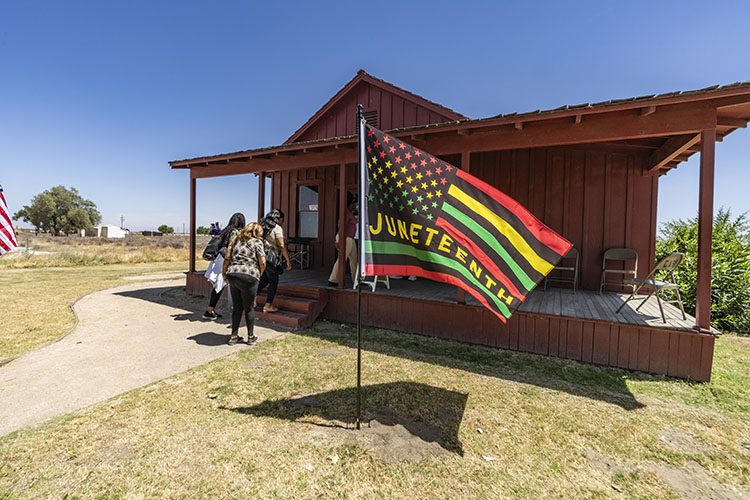 A Juneteenth flag welcomes visitors to Colonel Allensworth State Historic Park. Photo from California State Parks.
What you need to know: California State Parks is offering a special edition Historian Passport free to download through the Fourth of July weekend. The Historian Passport (typical cost $50) is valid for the rest of 2026 at more than 30 state historic parks throughout California, where visitors can immerse themselves in the state’s unvarnished, complex history.
SACRAMENTO —California is making the incredible sites that preserve the state’s complex history free to visit through a special limited-time pass.
In celebration of Juneteenth and the 250th anniversary of the signing of the Declaration of Independence, Governor Gavin Newsom announced that California State Parks is offering a special free version of its Historian Passport — normally $50 for the year — for admission of up to four people per pass at more than 30 state historic parks throughout the state. Starting today through Monday, July 6, Californians can download the pass for free and use it for unlimited visits to participating historic parks from Juneteenth until the end of the year.
“California doesn’t hide from hard truths and uncomfortable history – in fact, we embrace it and learn from it. While Trump ignores and tries to rewrite the past, California is marking these celebrations of freedom by inviting everyone to learn our country’s history – our real history – for free in our state parks.”
–Governor Gavin Newsom
“Building on our Outdoors for All initiative, we’re creating even more opportunities for Californians to explore the natural beauty and rich history that define our state. As we celebrate Juneteenth and our nation’s 250th anniversary, the free, special edition Historian Passport provides an incredible avenue for California families to immerse themselves in nature while gaining a deeper understanding of the remarkable place we’re proud to call home.”
–First Partner Jennifer Siebel Newsom
Coming on the heels of the fifth annual California State Parks Week, the limited-time free pass is the latest example of California expanding access to all Californians, giving more of them the opportunity to experience the unmatched natural and cultural resources of the nation’s largest and most diverse state park system, which includes historic sites significant to many peoples and cultures, including Native Americans. State Parks is embracing the state’s complex history through its Reexamining Our Past Initiative, working to tell the full story of how California came to be.
Supported by donations from the California State Parks Foundation and the California State Railroad Museum Foundation, the special edition of the Historian Passport highlights California’s rich and complex history through places that preserve stories of freedom, resilience, innovation, and community — including Colonel Allensworth State Historic Park, the most significant state park representing Black history in California. Participating parks span the state and showcase California’s diverse cultural, political, and social history, from Gold Rush-era communities and military landmarks to historic homes, missions and museums.
“California’s state historic parks preserve some of our nation’s most powerful and meaningful stories, and I’m proud to live in a state that celebrates diversity to connect more people with those stories through this limited-time free pass,” said California State Parks Director Armando Quintero. “I hope the free Historian Passport introduces more Californians to the state’s historic gems and sparks a curiosity, thirst for knowledge and sense of belonging that leads to many return visits. I thank Governor Newsom and the First Partner for their unwavering support of State Parks, and a special thanks to our partners, the California State Parks Foundation and the California State Railroad Museum Foundation, for supporting the free Historian Passport.”
“Juneteenth is a celebration of Black freedom, resilience, and the enduring pursuit of equality. For generations, Black Americans were excluded from public spaces and denied access to the opportunities and experiences that others enjoyed,” said Senator Akilah Weber Pierson, M.D., Chair, California Legislative Black Caucus. “By widening access to California’s historic state parks to more families, we help ensure that public lands are places where everyone can learn and benefit from.”
The free pass builds on Governor Newsom’s State Parks Forward announcement on Earth Day, a bold effort to establish three new state parks — including a historic site near Bakersfield — and expand existing parks by more than 30,000 acres by the end of the decade. The announcement also follows Governor Newsom’s directive in January that more than 200 state parks offer free entry on Martin Luther King Jr. Day 2026.
Discover California stories that shaped the nation
The California State Parks Historian Passport connects visitors to places that preserve the many cultures, communities, and defining moments that continue to shape California and the United States. Participating parks reflect stories of freedom, innovation, resilience and identity that continue to resonate today.
To visit the park sites, download your free special edition Historian Passport by July 6, and begin exploring California’s history firsthand. An account with ReserveCalifornia.com, State Parks’ official reservation service, is required to download.
Here are just a few parks passholders can access:
At Colonel Allensworth State Historic Park, visitors can explore a California town founded, financed, and governed by African Americans. Established in 1908 by Colonel Allen Allensworth and a group of Black pioneers, the state historic park stands as a powerful symbol of self-determination, opportunity and freedom, making it especially meaningful during Juneteenth commemorations.
At Indian Grinding Rock State Historic Park, visitors can view what is thought to be the largest collection of bedrock mortars in North America and one of the largest ceremonial roundhouse still used by Native Americans in California. Within the park, the Chaw’se Regional Indian Museum features a variety of exhibits and an outstanding collection of artifacts from tribes throughout the region.
At Marshall Gold Discovery State Historic Park, visitors can see the site where gold was discovered in 1848, sparking the California Gold Rush that dramatically transformed the state and nation. Visitors also learn the complex history of how the Gold Rush accelerated westward expansion, drawing people from around the world in pursuit of new opportunity, while acknowledging the hard history of violence toward and resilience of California Native Americans.
At Weaverville Joss House State Historic Park, visitors can experience the oldest continuously used Chinese temple in California. Built in the heart of a Gold Rush-era Chinese American community, the site reflects the enduring contributions, traditions and resilience of Chinese immigrants who helped build California despite widespread discrimination and exclusion.
These parks, alongside nearly 30 other participating state historic parks, invite Californians to explore the stories, struggles, and achievements that continue to shape our collective history. While there, visitors can take part in State Parks’ second annual Share Your Space Photo Contest through the OuterSpatial app.
Making State Parks accessible for all
While this special edition Historian Passport is only available for a limited time, State Parks offers a number of free passes all year round in support of California’s Outdoors for All initiative. California residents from all walks of life — including families receiving public assistance, ALL fourth graders in public school, and anyone with a library card — can access free passes that open the nation’s largest and most diverse state park system and the unvarnished history of California to everyone.
- California State Library Parks Pass: Allows library cardholders to check out a pass from any public library for free vehicle day-use entry at 200-plus state parks. It’s just like borrowing a book, with more than 33,000 passes available at over 1,100 public and tribal libraries in the state.
- California State Parks Adventure Pass: Provides free entry to fourth-graders in public schools and their families at 54 amazing state parks. Download the pass and choose your adventure — mountains, deserts, forests, lakes.
- Golden Bear Pass: This free annual pass provides vehicle day-use entry at over 200 state parks for families who receive CalWORKs, individuals who receive supplemental security income, income-eligible Californians over age 62, and participants of California’s Tribal Temporary Assistance for Needy Families (TANF) program.
- Distinguished Veterans Pass: This free pass entitles honorably discharged California resident veterans to free vehicle day-use, family camping, and boat use at over 100 state parks. In addition, active, reserve, and retired military members receive free access on Memorial Day and Veterans Day.
State Parks protects the best of California’s natural and cultural history; more than 340 miles of coastline; the tallest, largest and among the oldest trees in the world; and deserts, lakes, rivers and beaches. There are more than 5,200 miles of trails, 15,000 campsites, 145,000 acres for off-highway vehicle recreation, plus prehistoric and historic archeological sites, ghost towns, historic homes and monuments – all waiting for you.
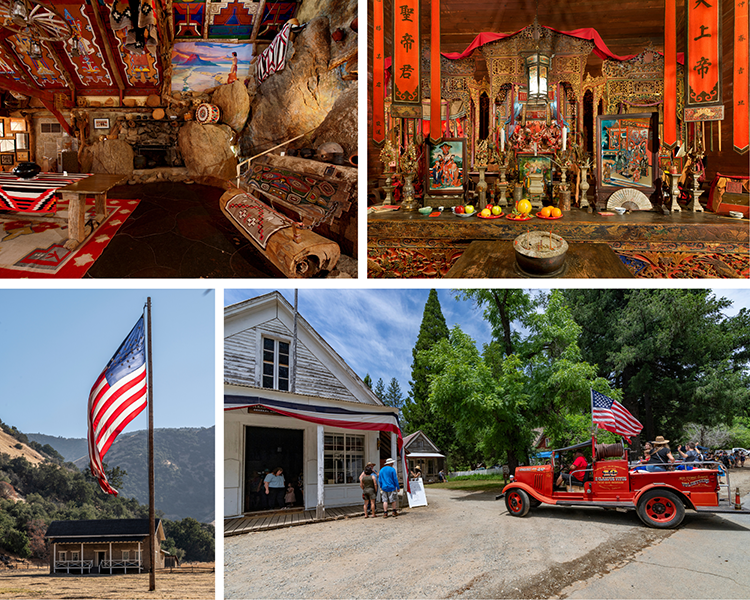 Clockwise from top left: Antelope Valley Indian Museum State Historic Park, Weaverville Joss House State Historic Park, Fort Tejon State Historic Park, and Malakoff Diggins State Historic Park all accept the 2026 Historian Passport. Photos from California State Parks.
Subscribe to California State Parks News via e-mail at NewsRoom@parks.ca.gov
California State Parks provides for the health, inspiration and education of the people of California by helping to preserve the state’s extraordinary biological diversity, protecting its most valued natural and cultural resources, and creating opportunities for high quality outdoor recreation.