
California State Parks and Kakoon Ta Ruk Band of Ohlone-Costanoan Indians of the Big Sur Rancheria Sign Memorandum of Understanding
Contact:
Newsroom@parks.ca.gov
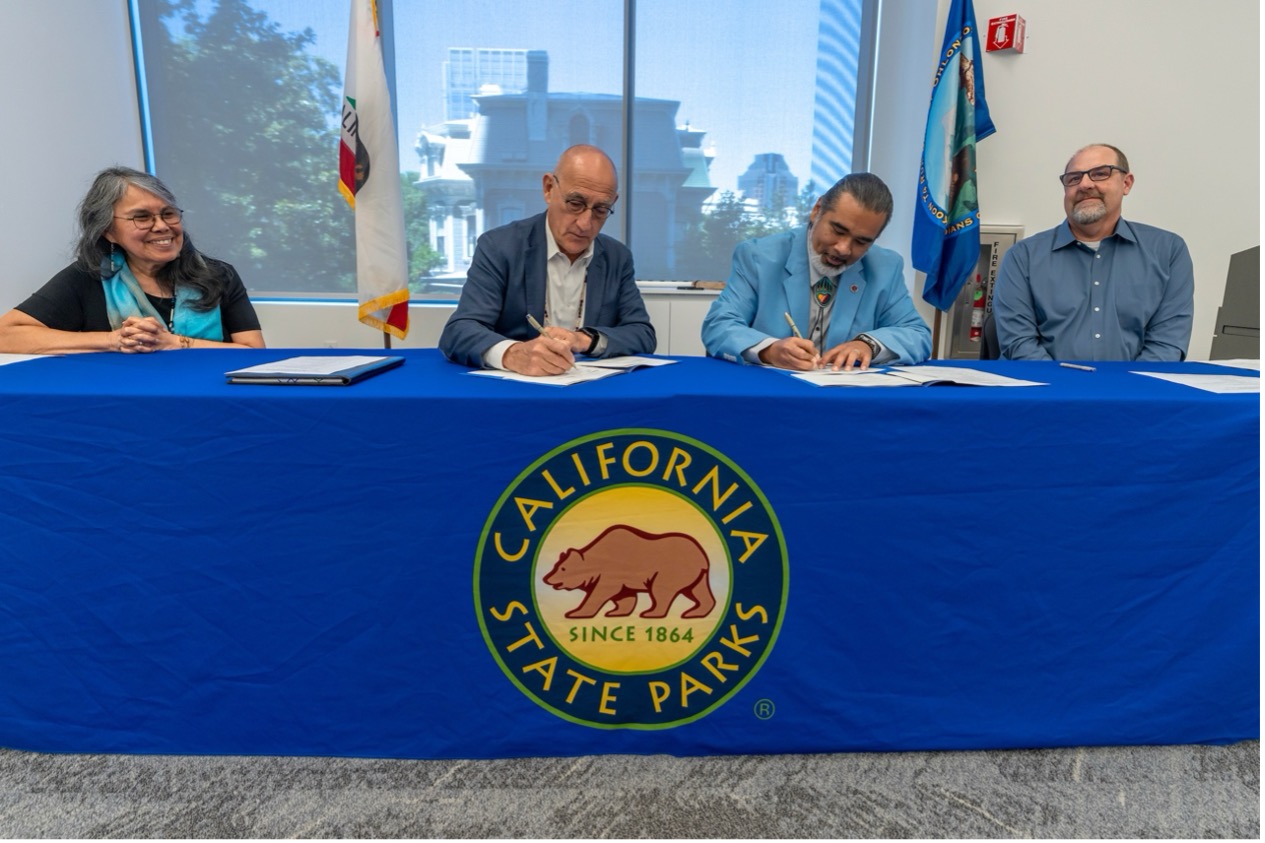
California State Parks and the Kakoon Ta Ruk Band of Ohlone-Costanoan Indians of the Big Sur Rancheria sign memorandum of understanding. Photo from California State Parks.
SACRAMENTO — California State Parks and the Kakoon Ta Ruk Band of Ohlone-Costanoan Indians of the Big Sur Rancheria (Kakoon Ta Ruk) signed a memorandum of understanding (MOU) on May 15 to formalize the coordination and partnership between the Kakoon Ta Ruk and State Parks for the state parks within the tribe’s ancestral lands in Monterey County.
This MOU includes cooperation on the stewardship of the state park units, expanding upon previous joint projects of plant restoration, and collaborating on interpretation to further highlight Native American voices and stories in State Parks, a focus of the Reexamining Our Past Initiative.
“This MOU will streamline and improve Tribal access to the parks within their ancestral lands, where they can collect plant materials and minerals for traditional purposes,” said State Parks Director Armando Quintero. “This streamlined access supports the continuation of cultural practices by facilitating access for cultural activities, gathering and passing down of traditional knowledge.”
“Through generations, the Tribe has cared for and protected the land, preserving the native resources and ecological knowledge that sustain cultural traditions,” said Kakoon Ta Ruk Vice Chair Lydia Bojorquez. By restoring culturally significant landscapes, we are creating opportunities for the re-awakening of basketry and the creation of new works that honor our ancestral practices while inspiring contemporary Indigenous artistry. As the land is renewed, so too are our citizens’ cultural connections, knowledge, and creative expressions that strengthen the greater community and preserve our traditions for future generations."
This MOU supports Governor Gavin Newsom’s Statement of Administration Policy on Native American Ancestral Lands, which encourages state entities to seek opportunities to support California tribes’ co-management of and access to natural lands that are within a California tribe’s ancestral land and under the ownership or control of the State of California.
This is the 15th MOU between State Parks and a California Native American tribe.
###
About the Kakoon Ta Ruk Band of Ohlone-Costanoan Indians of the Big Sur Rancheria
Since time immemorial, the coastal lands and waters of Monterey County have been home to the Rumsen Ohlone people, whose ancestral villages included, but not limited to “Kakon-ta-ruk, Sirhin-ta-ruk, Tucutnut, Echilat, and Ishxenta”. Today, California State Parks serves as steward to some of the region’s most remarkable landscapes—lands once inhabited and cared for by the ancestors of the citizens of KaKoon Ta Ruk Band of Ohlone-Costanoan Indians of the Big Sur Rancheria.
For generations, the protection and preservation of these sacred sites have remained a central priority for the Tribe and neighboring Tribal Nations. The village of KaKoon Ta Ruk was also home to Jacinta Gonzales, the three-times great-grandmother of current Tribal Chairman Isaac Bojorquez, further deepening the Tribe’s enduring connection to these ancestral homelands.
From the arrival of the first Spanish explorers to the policies of California’s first Governor—when violence and persecution were inflicted upon Indigenous peoples—California Tribal Nations have endured centuries of hardship and injustice. Yet today marks the beginning of a new chapter defined by partnership, collaboration, and a shared commitment to honoring and preserving the history, culture, and sacred places of California’s First Peoples.
Subscribe to California State Parks News via e-mail at NewsRoom@parks.ca.gov
California State Parks provides for the health, inspiration and education of the people of California by helping to preserve the state’s extraordinary biological diversity, protecting its most valued natural and cultural resources, and creating opportunities for high quality outdoor recreation.