
California State Parks Welcomes Visitors to Celebrate Memorial Day Weekend Safely and Responsibly
Contact:
Newsroom@parks.ca.gov
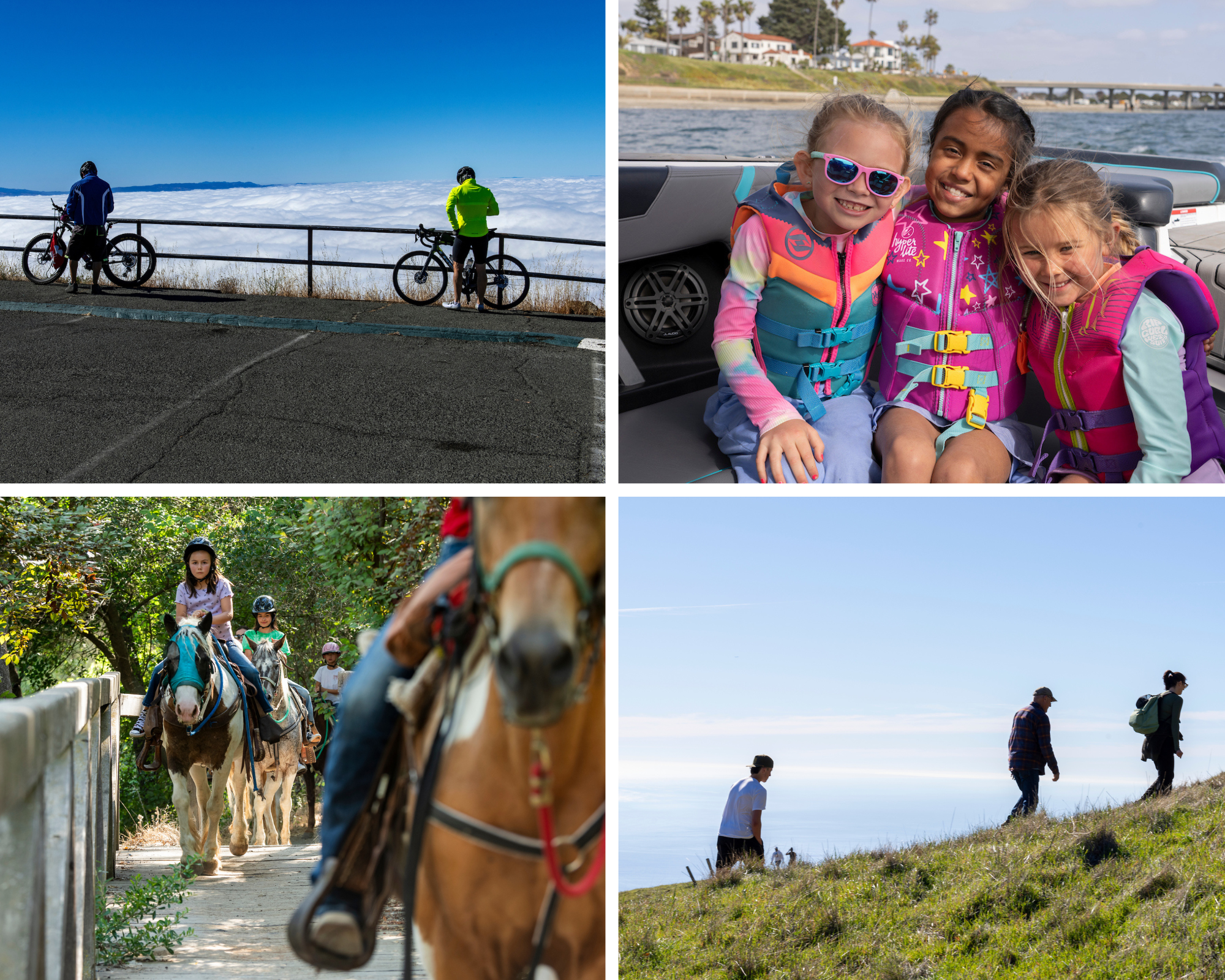 Top photos - left: Cyclists take in the view at Mount Diablo State Park (SP). Right: It's always important to wear a U.S. Coast Guard-approved life jacket when recreating in California's waterways. Bottom photos - left: Folsom Lake State Recreation Area visitors enjoy horseback riding. Right: Hikers scale Mount Tamalpais SP. Photos from California State Parks.
SACRAMENTO — As the unofficial start of summer kicks off, California State Parks invites Californians and visitors from around the world to enjoy Memorial Day weekend safely and responsibly. Whether you’re catching the waves at Crystal Cove State Park, riding the sandy hills at Heber Dunes State Vehicular Recreation Area or hiking under the giant sequoia groves at Calaveras Big Trees State Park, California’s 280 state parks offer a diverse array of activities for visitors eager to celebrate the holiday.With such diverse landscapes, California has something for everyone looking to enjoy nature, and following simple safety precautions, such as wearing a U.S. Coast Guard-approved and properly fitted life jacket or proper riding gear, avoiding alcohol, and knowing one’s limits while engaged in aquatic activities, can help save lives and create memorable outings at state parks.
Being mindful of the following safety tips will help you and your party have an enjoyable holiday weekend:
Preparing for Your Trip
- Know Before You Go: Check parks.ca.gov for conditions, hours and local guidelines.
- Check the Weather: Dress appropriately, stay hydrated and use sun protection.
- Prepare an Itinerary: No matter what type of recreational activity you are planning, leave an itinerary of your trip with a family member or friend with information such as the names and ages of all participants, your travel destination, and your expected return date. This will provide law enforcement personnel with essential information if an emergency response may be needed.
- Learn the Rules of Recreating in Boats and Off-Highway Vehicles (OHVs): There are laws specific to operating OHVs on public lands and boats on California’s waterways. For boating laws, please visit BoatCalifornia.com. OHV regulations are also available to review online.
Respect the Water
- Wear a Life Jacket: Water-related accidents can happen suddenly and rapidly. If you are going in or near the water, make sure you and everyone with you, especially children, wear properly fitting, U.S. Coast Guard-approved life jackets. Wearing a life jacket is the best way to increase your chances of survival during an incident in the water. View locations where public agencies and private organizations offer to loan life jackets to the public.
- Supervise Children: Make sure to appoint a designated “water watcher,” taking turns with other adults. Never assume someone is watching your children.
- Know your limits: Swimming in a lake, ocean or river is different from swimming in a pool. Waves, tides, strong rip currents and other water hazards can appear quickly and provide little time to act. If lifeguards are available, ask for current water conditions.
- Ocean Rip Currents: Stay calm and do not fight the current. Swim or float parallel to the shore until you are out of the current and then swim toward the shore.
- In an Emergency: Seek help from a lifeguard or call 911.
Avoid Alcohol
- Operating a recreational vehicle, including a boat or an OHV, with a blood alcohol concentration (BAC) of 0.08% or more is against the law. Impaired boaters can be arrested even with a lower BAC if the conditions are not safe, and your boat may be impounded.
- Some parks have alcohol bans. Check each specific park website to determine if there are local ordinances regarding alcohol.
Practice Fire Safety
- If you are building an open campfire, select a clear area away from fuels such as logs, brush or decaying leaves and needles.
- Never leave a fire unattended. Fully extinguish fires before leaving. Keep water and a shovel nearby.
- Do not build the fire larger than necessary.
Leave the Land as You Found It
- Pack it in, pack it out. Leave only footprints. Put food waste, napkins, single-use food wrappers, and other waste in trash bags until it can be properly disposed of. For human waste, the use of waste alleviation gel bags or other portable toilet options is recommended.
- Make sure to haul back large broken items, such as pop-up canopies, beach chairs, and coolers, and dispose of them properly at a local garbage site. Leaving these items on the beach or park or “near” a trash bin may be considered illegal dumping.
Enhance Your Park Experience
- Experience a safer outdoor adventure with the OuterSpatial app—your ultimate guide to California’s state parks. Navigate through a user-friendly interactive map, receive accurate directions, and stay updated in real-time for secure park exploration. OuterSpatial integrates with what3words to allow visitors to communicate precise locations in emergency situations, even in remote areas.
With 280 state parks (and growing) encompassing over 340 miles of coastline, 970 miles of lake and river frontage, and 5,200 miles of trails, the Golden State offers something for everyone. These public lands belong to us all; let’s work together to keep them clean, safe and accessible.
You can find additional safety tips and information on backpacking, biking, camping, horseback trails and laws at parks.ca.gov/SafetyTips. To find a state park near you, visit parks.ca.gov.
Reminder: State Parks is honoring the service of veterans, and active and reserve military members, by offering free admission to 147 participating state parks on Memorial Day – Monday, May 25.
Subscribe to California State Parks News via e-mail at NewsRoom@parks.ca.gov
California State Parks provides for the health, inspiration and education of the people of California by helping to preserve the state’s extraordinary biological diversity, protecting its most valued natural and cultural resources, and creating opportunities for high quality outdoor recreation.