
California State Parks Pilot Program Partners with Nonprofits to Improve Access to Outdoor Spaces
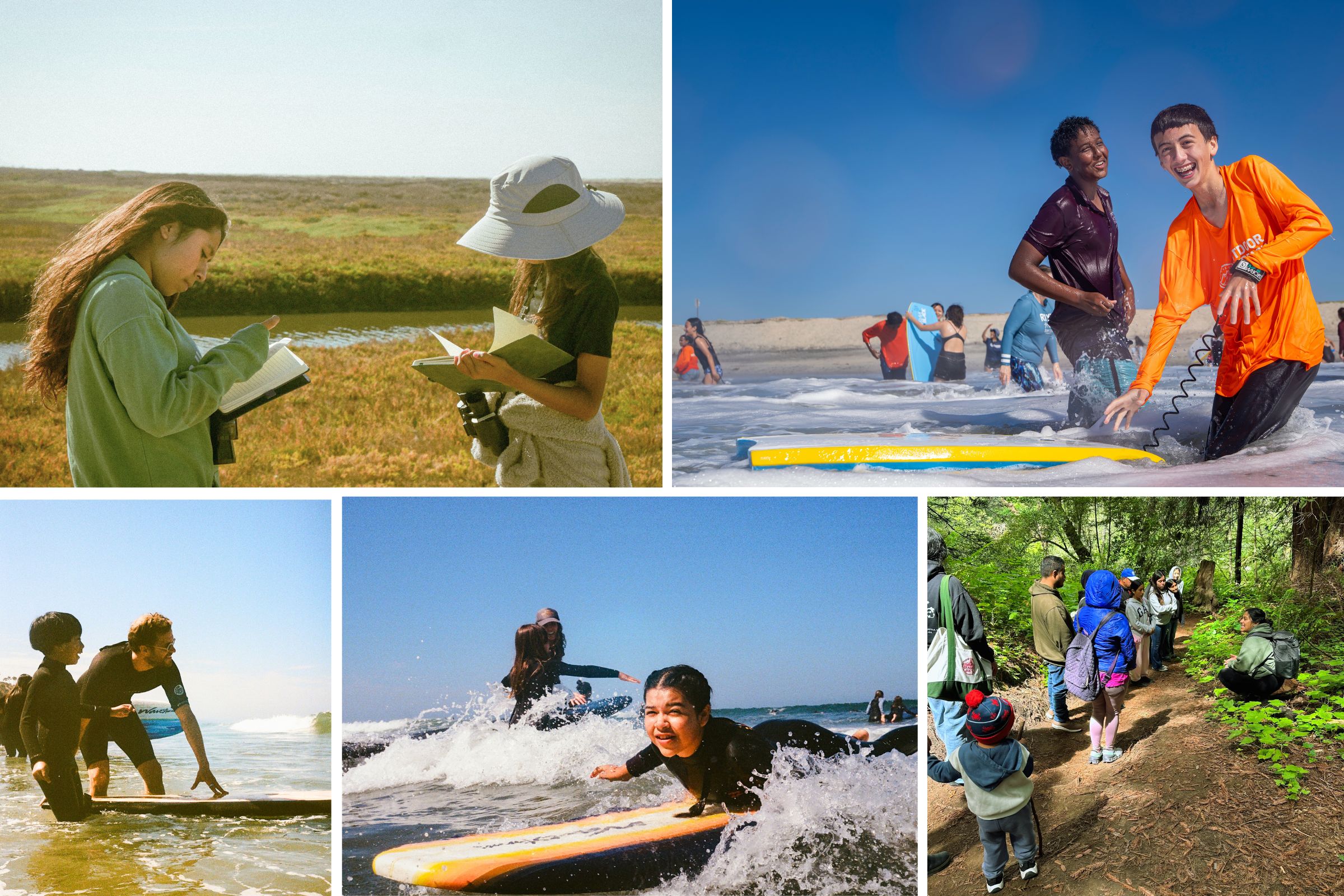
Participants learning about ecosystems, surfing, hiking and spending time together at California's state parks through programs offered under the Community Access Agreement pilot program.
SAN DIEGO/SANTA CRUZ — California State Parks and nonprofit partners are opening new doors for underserved communities to connect with nature through a first-of-its-kind pilot program in San Diego and Santa Cruz counties. The pilot program aims at breaking down barriers to parks and outdoor recreationwith eligible nonprofit and tribal organizations to provide free access along with interpretive and visitor services in state parks. California State Parks has signed Community Access Agreements with nonprofits Friends of Santa Cruz County Parks, and Outdoor Outreach and Un Mar de Colores, both based in San Diego, on this groundbreaking model designed to make outdoor recreation and education more equitable and accessible for all.
Made possible by Assembly Bill 1150 (2023), the pilot program has introduced youth and families who have historically faced barriers to the outdoors to new experiences ranging from surfing, kayaking, camping and guided nature walks to environmental education and outdoor leadership opportunities in California’s iconic state parks and beaches. This effort aligns with the Newsom Administration’s Outdoors for All Initiative, which aims to expand access to Californians’ open spaces.
In their first year, these innovative partnerships are already showing promising results. Participants have described discovering parks and trails they never knew were nearby, spending more time together as families, improving their physical and mental well-being, gaining confidence being outdoors, and developing a deeper connection to and appreciation for nature. Studies have shown that community members living near parks and green space have less mental distress, are more physically active, and have extended lifespans.
“Removing barriers to state parks and promoting a sense of belonging is at the heart of Outdoors for All, and this pilot program is a great example of how to make that a reality,” said California State Parks Director Armando Quintero. “I hope every program participant leaves with the feeling that these are their state parks and that this is where they live.”
Un Mar de Colores used its agreement to connect approximately 100 participants with surfing, environmental education and community events across five state beaches. For example, San Elijo and Carlsbad state beaches paired environmental education and surf sessions for cohorts of about 12-15 students during the week.The participants were primarily Latino, Indigenous and immigrant youth from low-income families across San Diego County and the border region. All of them were visiting state parks for the first time, and for nearly all, it was also their first time surfing. By providing transportation, gear, bilingual instruction and free programming, the organization helped remove some of the practical barriers that can prevent families from experiencing the coast.
“Every young person deserves the ocean,” said Mario Ordoñez-Calderón, executive director of Un Mar de Colores. “This agreement opened five state beaches to young people who had never visited them before. Many of them caught their first wave there and were welcomed as people who belong there and, in turn, can help care for it. When a child who once feared the water ends the day laughing in it, you see what public access really means. We are grateful to California State Parks for opening the door."
Similarly, Friends of Santa Cruz County Parksintroduced 64 participantsto the outdoors through four guided family hikes at Manresa, Seacliff and Sunset state beaches and The Forest of Nisene Marks State Park. Around 94% were first-time visitors, including families referred through ParkRx Santa Cruz County from Pajaro Valley, Live Oak and San Lorenzo Valley. The hikes offered opportunities to explore nature, learn about local plants and wildlife, and build outdoor recreation skills. Each outing also included a trained high school-age volunteer who helped lead portions of the hikewhile gaining valuable outdoor knowledge and leadership experience.
"This pilot was simple and effective in helping us introduce local youth and families to our magnificent state parks," said Mariah Roberts, executivedirector of Friends of Santa Cruz County Parks.
San Diego-based nonprofit Outdoor Outreach is using its Community Access Agreement to help address barriers identified by the youth and families it serves, including lack of transportation, limited awareness of nearby green spaces and concerns about safety. Since July 2025, the organization has providedmore than 200 youth from underserved San Diego communities with free outdoor recreation and educational experiences at several state parks and beaches, including Cardiff, Carlsbad and Silver Strand state beaches, Torrey Pines State Natural Reserve and the Tijuana Estuary. Together, participants enjoyed activities ranging from hiking and camping to surfing, paddleboarding, kayaking, environmental education and stewardship. These outingsconnected young people to the transformative power of California’s state parks and beaches and enabled them to build confidence and learn outdoor skills.
“This partnership allows us to open a world of possibility for local youth from communities without good access to parks, nature, and the coast,” said Ben McCue, executive director of Outdoor Outreach.“Through ongoing education, recreation and stewardship activities at our state parks and beaches, Outdoor Outreach and California State Parks are supporting young people to connect to nature and strengthen their sense of belonging, self-worth and ability to make a difference.”
Barriers to outdoor access can extend well beyond admission costs. In recent surveys by Outdoor Outreach, 75% of participating youth reported that they lacked transportation to outdoor spaces, 44% said they were unaware of green spaces near their homes and 13% said their local parks felt unsafe. By partnering with organizations that already have strong relationships within their communities, the Community Access Agreement pilot creates a new way for State Parks to address those inequities directly, expanding opportunities for outdoor recreation and education to those who need it most.
The pilot program will continue through Jan. 1, 2029. State Parks will collect data and prepare annual reports evaluating the agreements’ effectiveness, benefits and impacts. Findings from the pilot will help inform a final report to the Legislature due Dec. 31, 2028, and could help shape future partnerships aimed at making California’s state parks more accessible and welcoming to all.
Subscribe to California State Parks News via e-mail at NewsRoom@parks.ca.gov
California State Parks provides for the health, inspiration and education of the people of California by helping to preserve the state’s extraordinary biological diversity, protecting its most valued natural and cultural resources, and creating opportunities for high quality outdoor recreation.