
Division of Boating and Waterways to Begin Annual Control Efforts for Aquatic Invasive Plants in the Sacramento-San Joaquin Delta
Contact:
Newsroom@parks.ca.gov
SACRAMENTO – California State Parks’ Division of Boating and Waterways (DBW) announced today its plans for this year’s control efforts for invasive aquatic plants in the Sacramento-San Joaquin Delta and its southern tributaries (Delta). Starting March 19, DBW will start herbicide treatments on water hyacinth, South American spongeplant, Uruguay water primrose, Alligator weed, Brazilian waterweed, curlyleaf pondweed, Eurasian watermilfoil, coontail, fanwort and ribbon weed in the Delta. Treatment start dates may change depending on weather conditions and plant growth or movement.
These aquatic invasive plants have no known natural controls in the west coast’s largest estuary, the Delta. They negatively affect the Delta’s ecosystem as they displace native plants. Continued warm temperatures help the plants proliferate at high rates. Plants are also known to form dense mats of vegetation, creating safety hazards for boaters, obstructing navigation channels, marinas and irrigation systems. Due to their ability to rapidly spread to new areas, the plants will likely never be eradicated from Delta waters. Therefore, DBW operates “control” programs as opposed to “eradication” programs. The division works with local, state and federal entities to better understand the plants and implement new integrated control strategies to increase efficacy.
“DBW continues to work with the public and our local, state and federal partners to continue controlling these aquatic invasive plants to reduce or eliminate the negative impacts on people's daily lives and businesses,” said DBW’s Deputy Director Ramona Fernandez. “The continued use of monitoring and technology allows DBW to continue focusing on the areas that best help DBW manage the challenges.”
All herbicides are registered for aquatic use with the U.S. Environmental Protection Agency and the California Department of Pesticide Regulation. Treated areas for submersed aquatic vegetation (Brazilian waterweed, curlyleaf pondweed, Eurasian watermilfoil, coontail, fanwort and ribbon weed) will be monitored to ensure herbicide levels do not exceed allowable limits and follow EPA-registered label guidelines. The public may view the public notices and sign up to receive weekly updates on this year’s treatment season on DBW's website.
Below is a list of proposed control actions for the 2026 treatment season:
Floating Aquatic Vegetation Control Program
Water hyacinth, South Americanspongeplant, Uruguaywater primrose, and alligator weed.
Herbicide Control
- Proposed Treatment Period
- All Sites: March 19, 2026 – Nov.30, 2026
- Type of Herbicides: Glyphosate, Imazamox, 2,4-D, or Diquat
- Potential Treatment Areas: Initially in and/or around, but not limited to,
Submersed Aquatic Vegetation Control Program
Brazilian Waterweed, curlyleaf pondweed, Eurasian watermilfoil, coontail, ribbon weed, and fanwort.
Herbicide Control
- Treatment Period: Starting March19, 2026 through Nov. 30, 2026, treatment period based upon DBW field survey data, water temperatures and fish surveys.
- Type of Herbicide: Fluridone, Diquat, Flumioxazin or Endothall.
- Potential Treatment Areas: Inand/or around the following areas (individual areas will be noticed prior to treatment application):
-
Anchorages, boat ramps and marinas: B&W Resort, Delta Marina Yacht Harbor, Grindstone Joes, Hidden Harbor Resort, Korth’s Pirates Lair, Oxbow Marina, Owl Harbor, River Point Landing, Rivers End, St. Francis Yacht Club, Tiki Lagoon, Tracy Oasis Marina, Turner Cut Resort, Vieira’s Resort, Village West Marina and Willow Berm.
-
Near Old River: Berkeley Ski Club, Bullfrog Ski Club, Cruiser Haven, Delta Coves, Diablo Ski Club, Discovery Bay, Golden Gate Ski Club, Stockton Ski Club, Piper Slough, Sandmound Slough, Taylor Slough, Orwood Marina, Italian Slough, Hammer Island and Kings Island.
-
Sacramento Area: French Island, Hogback, Long Island Slough, Sacramento Marina, Snug Harbor and Washington Lake.
-
Stockton Area: Atherton Cove, Calaveras River, Bishop Cut, Honker Cut, Mosher Slough, Stockton Sailing Club and Windmill Cove.
-
Antioch Area: Lauritzen Yacht Harbor and New Bridge Marina.
-
Last year, DBW treated 2,228 acres of floating aquatic vegetation and 1,464 acres of submersed aquatic vegetation. A combination of herbicide, biological and physical control methods will be used to help control invasive plants at high priority sites in the Delta.
Funding for DBW’s aquatic invasive plant control programs comes from the Harbors and Watercraft Revolving Fund, which receives revenues from boaters’ registration fees and gasoline taxes.
In 1982, California state legislation designated DBW as the lead state agency to cooperate with other state, local and federal agencies in controlling water hyacinth in the Delta, its tributaries, and the Suisun Marsh. The Egeria Densa Control Program was authorized by law in 1997 and treatment began in 2001. In 2012, spongeplant was authorized for control upon completion of the biological assessment. In 2013, DBW was able to expand its jurisdiction to include other invasive aquatic plants, and since then other aquatic invasive plants such as Uruguay water primrose, Eurasian watermilfoil, Carolina fanwort, coontail, Alligator weed, and Ribbon weed have been added to the AIPCP program.
To report sightings, subscribe for program updates or for more information regarding the control program, connect with us online at dbw.ca.gov/AquaticInvasiveSpecies, via email at AIS@parks.ca.gov or by phone (888) 326-2822.
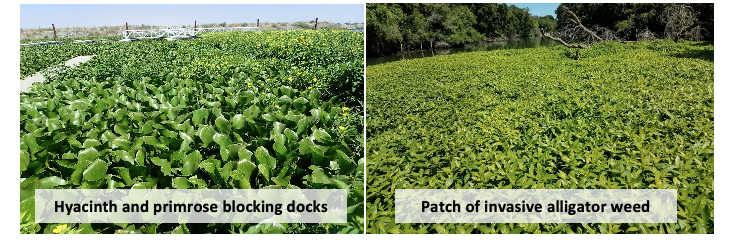 Photos from Division of Boating and Waterways.
Subscribe to California State Parks News via e-mail at NewsRoom@parks.ca.gov
California State Parks provides for the health, inspiration and education of the people of California by helping to preserve the state’s extraordinary biological diversity, protecting its most valued natural and cultural resources, and creating opportunities for high quality outdoor recreation.