
Parks California Awards $1.2 Million to Community Organizations Expanding Access to California State Parks
Contact:
California State Parks I Newsroom@parks.ca.gov
Parks California I media@parkscalifornia.org
Route to Parks grants support first-time visits, waterway connections and community-led outdoor experiences statewide
Parks California and California State Parks today announced the award of more than $1.2 million in grants to 34 community organizations across the state through the Route to Parks program, supporting efforts to reduce transportation barriers and expand access to California’s state parks. The 2026 grants are expected to help more than 15,000 people — many visiting for the first time — experience one of the most diverse state park systems in the country.
The selected programs span urban, rural and tribal communities and include overnight camping trips, multi-day excursions and recurring day programs designed to reflect community needs and interests. Transportation solutions feature free round-trip bus service, biking programs, train tickets, gas and ride-share reimbursement options and more.
“Route to Parks shows what’s possible when community organizations and California State Parks come together to meet people where they are,” said California State Parks Director Armando Quintero. “Parks are for everyone, and these partnerships help ensure more Californians experience a true sense of belonging — whether it’s a first camping trip, time on the water or reconnecting with lands that hold deep cultural significance.”
Launched in 2020, Parks California’s Route to Parks grants program addresses transportation and access challenges that prevent many communities from visiting state parks. The program is supported through a joint agreement between California State Parks and Parks California, along with private philanthropic investments, including support from BMO, PG&E Corporation Foundation and other partners.
“Access to parks is about more than a single visit, it’s about building a lifelong connection to nature,” said Kindley Walsh Lawlor, president & CEO of Parks California. “Through Route to Parks, we’re investing in trusted community partners who know how to design experiences that feel welcoming, relevant and joyful. We’re proud to support this year’s grantees and the work they are leading across California.”
Grant awards average about $33,800 and support transportation, staffing, equipment and park-based programs. Together, the 2026 grantees reflect the geographic and cultural diversity of California’s State Park System.
Select 2026 Route to Parks Grantees
- Blue Dot Education — Imperial and San Diego counties — $30,000
Provides underrepresented students with a no-cost, college-credit California Naturalist course that blends field-based learning, visits to state parks and waterways, and a shared overnight camping experience. - Community Nature Connection — Los Angeles — $33,577
Expands a bilingual wellness and outdoor learning program for high school girls, combining guided trips to local and coastal state parks with hiking, water-based activities and a multi-day camping experience. - Mighty Community Advocacy — Central Valley and Santa Cruz — $44,795
Connects young parents and their children to Millerton Lake State Recreation Area through a six-week summer program offering transportation, water safety education and family-centered outdoor activities. - Hearts for Sight Foundation — Inland Empire and Los Angeles — $30,000
Removes transportation and accessibility barriers for members of the visually impaired community through monthly, guided outings to state parks. - Yurok Tribe — North Coast — $30,000
Supports transportation and accessibility for Yurok community members to participate in culturally grounded programs at state parks within ancestral lands.
“Our community knows what it takes for them to feel welcomed, supported and grounded while in the outdoors,” said Nishea Trinidad, founding executive director of Mighty Community Advocacy. “Route to Parks makes it possible for us to lead that work alongside them — with Parks California and State Parks as partners — so access is led by the people it’s meant to support.”
A complete list of Route to Parks grant recipients is available online.
“The Route to Parks program reflects California’s strong commitment to building an Outdoors for All – where outdoor experiences are welcoming, inclusive and accessible to every Californian, regardless of their zip code,” said Gloria Sandoval, deputy secretary for access for California Natural Resources Agency. “By supporting community-led programs and first-time park visits, these grants help ensure that California’s public lands truly benefit everyone.”
In partnership with California State Parks’ Waterway Connections Initiative, more than half of the 2026 Route to Parks programs include water-based activities or education, helping participants better understand California’s rivers, lakes, coastlines and watersheds through hands-on experiences.
Since its launch, Route to Parks has partnered with more than 120 community organizations and supported access for more than 20,000 people statewide, with more than 75 percent of participants visiting a state park for the first time. The program is aligned with theOutdoor Access for All initiative championed by Governor Gavin Newsom and First Partner Jennifer Siebel Newsom and the Natural Resources Agency’s Outdoors for Allinitiative for greater access to nature for all Californians with a priority to expand access in underserved communities.
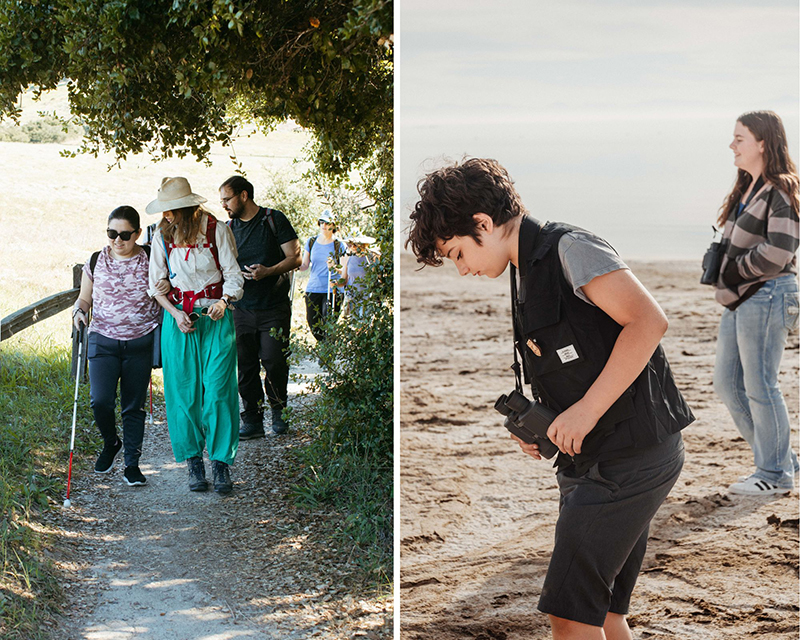 Left photo: Route to Parks returning grantee Hearts for Sights Foundation previously provided transportation for blind and visually impaired community members to enjoy trails at Topanga State Park in Los Angeles County. Right photo: Students take part in a bird watching and identification class at the Salton Sea State Recreation Area in Riverside County hosted by grantee Grower's First as part of Parks California's Route to Parks program.
Subscribe to California State Parks News via e-mail at NewsRoom@parks.ca.gov
California State Parks provides for the health, inspiration and education of the people of California by helping to preserve the state’s extraordinary biological diversity, protecting its most valued natural and cultural resources, and creating opportunities for high quality outdoor recreation.